
Inca Trail Routes: 2-Day, 4-Day and 5-Day Options Compared

If you are trying to choose between the different Inca Trail routes to Machu Picchu, the first thing to know is that the terminology can be confusing.
Travel companies usually talk about the 2-day Short Inca Trail, 4-day Classic Inca Trail and 5-day Inca Trail. Peru's official system, however, recognizes six authorized routes within the Inca Trail Network. Those are not two competing classifications: one describes regulated routes, while the other describes the trekking itineraries travelers are most likely to book.
For most travelers, the decision is simpler:
- Choose the 2-day Short Inca Trail if time is limited, you do not want several nights of camping, or you want a shorter taste of the historic trail.
- Choose the 4-day Classic Inca Trail if the journey itself matters as much as reaching Machu Picchu and you are prepared for camping, altitude and several demanding hiking days.
- Consider a 5-day itinerary if you want the Classic Trail experience at a less compressed pace—but check exactly what the operator means by “5-day Inca Trail,” because itineraries are not completely standardized.
I chose the 4-day, 3-night route, and the biggest surprise was that Machu Picchu was not the only highlight. The biodiversity, archaeological sites, changing Andean landscapes and days spent on the trail became a major part of the experience.
Updated August 2026: Inca Trail capacities, Machu Picchu access rules and operational conditions can change. Always confirm current details before booking.
- What Are the Different Inca Trail Routes?
- Inca Trail Routes at a Glance
- Which Inca Trail Route Should You Choose?
- The 2-Day Short Inca Trail
- The 4-Day Classic Inca Trail
- What Is the 5-Day Inca Trail?
- 2-Day vs 4-Day vs 5-Day Inca Trail: The Key Differences
- Arriving at Machu Picchu After the Inca Trail
- Weather on the Inca Trail Can Change Fast
- Inca Trail Permits and Route Limits
- Are Salkantay, Lares and Choquequirao Inca Trail Routes?
- Is the Inca Trail Worth It?
- Frequently Asked Questions About Inca Trail Routes
What Are the Different Inca Trail Routes?
There are two useful answers.
From a traveler’s perspective, the three options you will encounter most often are:
- 2-day Short Inca Trail
- 4-day Classic Inca Trail
- 5-day Inca Trail
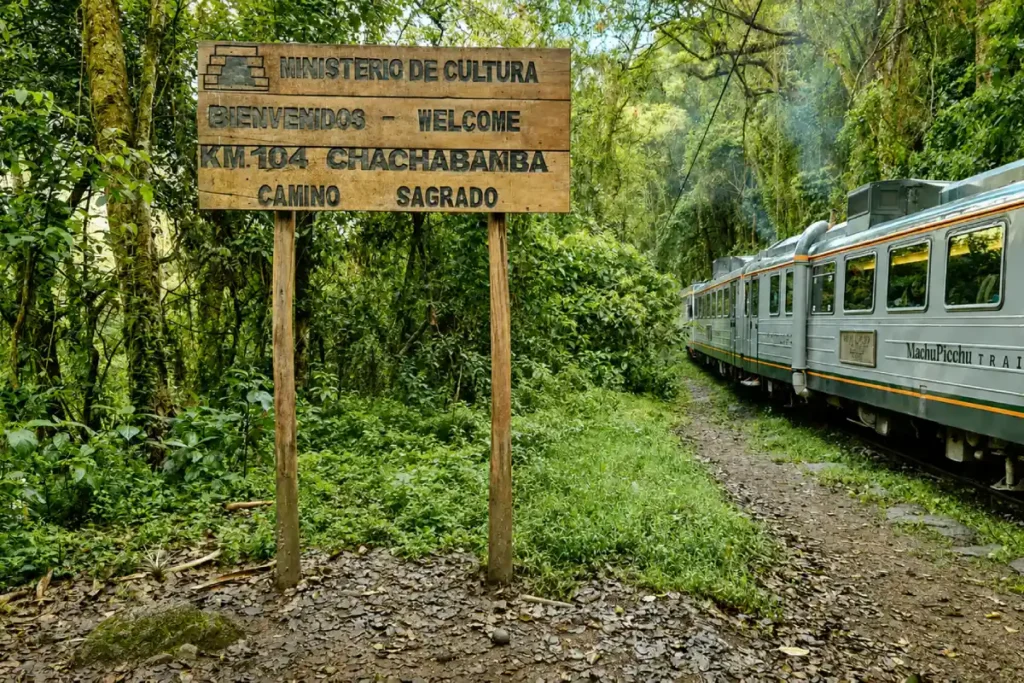
From a regulatory perspective, Peru’s official Machupicchu website currently lists six authorized routes in the Inca Trail Network, including routes beginning at Piskacucho, Qoriwayrachina, Soraypampa and Chachabamba. The official Route 05, for example, runs from Chachabamba through Wiñaywayna to Machupicchu and corresponds to the Km 104 corridor associated with the Short Inca Trail.
That distinction matters because a “5-day route” is not necessarily a separate official trail. It is often a different way of scheduling the Classic Trail.
The same caution applies to phrases such as “Machu Picchu trekking routes.” Salkantay, Lares and Choquequirao are often presented alongside the Inca Trail because they offer alternative trekking experiences in the region, but they should not automatically be treated as interchangeable versions of the Classic Inca Trail.
Inca Trail Routes at a Glance
| Factor | 2-Day Short Inca Trail | 4-Day Classic Inca Trail | 5-Day Inca Trail |
|---|---|---|---|
| Typical duration | 2 days / 1 night | 4 days / 3 nights | 5 days / 4 nights |
| Hiking distance | Roughly 10–12 km (6–7.5 mi) on the trail, depending on itinerary measurement | About 42 km (26 mi) | Often the same ~42 km (26 mi) Classic corridor, but verify itinerary |
| Typical starting point | Km 104 / Chachabamba | Km 82 / Piskacucho | Often Km 82 / Classic Trail corridor |
| Highest point | Around 2,720–2,750 m (8,924–9,022 ft) near Inti Punku | Dead Woman’s Pass, about 4,215 m (13,829 ft) | Usually the same high pass when following the Classic route |
| Physical demand | Moderate; significant uphill walking but limited cumulative trekking | Moderate to challenging | Same demanding terrain, usually spread over more time |
| Camping | Usually no trail camping; hotel arrangements vary | Normally 3 nights camping | Usually camping; some itineraries add a hotel night |
| Main archaeological highlights | Chachabamba, Wiñay Wayna, Inti Punku | Multiple sites including Runkurakay, Sayacmarca, Phuyupatamarca and Wiñay Wayna | Usually similar to the Classic route |
| Sun Gate experience | Yes on common Km 104 itineraries | Yes | Usually yes when following the Classic corridor |
| Best for | Limited time, no desire to camp, lower cumulative effort | Full trekking experience | Slower pace and more time on the trail |
The Classic Trail distance is commonly quoted at approximately 42 km / 26 miles, while current Short Inca Trail itineraries commonly place the hike at roughly 9–10 km or slightly more depending on what portions are included in the measurement.
The numbers help, but they do not tell the whole story. On the Classic Trail, altitude, long stone staircases and consecutive hiking days matter at least as much as total mileage.
Which Inca Trail Route Should You Choose?
Choose the 2-Day Inca Trail If…
The Short Inca Trail is the most obvious choice if you want part of the classic experience without committing to four days of trekking.
Consider it if:
- you only have one main hiking day available;
- you want to avoid multiple nights of camping;
- you prefer a lower maximum altitude than the Classic Trail;
- you still want to walk an authentic section of the Inca Trail;
- Wiñay Wayna and Inti Punku are priorities;
- several consecutive hiking days do not appeal to you.
Shorter does not mean effortless. The route from Km 104 involves sustained climbing and plenty of stone steps, and current itineraries commonly estimate about 5–7 hours of hiking on the main trekking day.
Choose the 4-Day Inca Trail If…
Choose the Classic Inca Trail if you want Machu Picchu to feel like the culmination of a journey rather than the only objective.
It is particularly suited to travelers who:
- want several days immersed in the Andes;
- enjoy hiking as an experience in itself;
- want to encounter multiple archaeological sites along the way;
- are comfortable camping;
- can cope with substantial altitude and elevation changes;
- have enough time to acclimatize before starting.
This was the option I chose.
In my case, the days before Machu Picchu ended up being every bit as memorable as I hoped. There were moments when the mountains, vegetation and archaeological remains made me forget that there was still a world-famous destination waiting at the end.
That is the strongest argument I can make for the four-day trek: you are not spending four days simply getting somewhere.
The trail itself is the experience.
Consider a 5-Day Inca Trail If…
The 5-day option makes sense if the Classic Trail appeals to you but you would rather distribute the experience over more time.
Several current operators describe their five-day product as the same Classic Trail corridor covered at a more relaxed pace, often using different campsites or reserving the fifth day for a more complete Machu Picchu visit.
That does not make it an easy trek.
If the itinerary still crosses Dead Woman’s Pass and follows the Classic corridor, the steep climbs, altitude and stone staircases remain. The difference is that the effort may be distributed differently.
Before booking, ask:
- Does this itinerary follow the same trail as the 4-day version?
- How many kilometers are walked each day?
- Where are the campsites?
- Do we reach Machu Picchu on Day 4 or Day 5?
- Is a hotel night included?
- Do we visit Machu Picchu once or twice?
- What permits and Machu Picchu entry tickets are included?
That last point matters because “5-day Inca Trail” is a commercial itinerary label, not one universally standardized product.
The 2-Day Short Inca Trail
Route and Main Highlights
The Short Inca Trail commonly begins at Km 104, near Chachabamba.
From there, the route climbs toward Wiñay Wayna, one of the most impressive archaeological complexes on this section of the trail. Hikers then continue toward Inti Punku, the Sun Gate, before descending toward Machu Picchu. Current published itineraries commonly place the main hiking day at around 9–10 km, although measurements vary according to exactly where the operator starts and stops counting.
The official Inca Trail Network identifies Route 05 as Chachabamba – Wiñaywayna – Machupicchu, and the 2025 capacity regulation explicitly identifies Route 05 with Km 104.
So the short version is not merely a made-up tourist shortcut. It uses part of the regulated historic network.
How Difficult Is the Short Inca Trail?
The Short Inca Trail avoids the highest mountain passes of the four-day trek, but it still requires fitness.
You are dealing with:
- several hours of continuous walking;
- a significant amount of climbing;
- uneven stone surfaces;
- Inca staircases;
- warm and humid sections;
- weather that may change quickly.
Inti Punku is roughly 2,700-plus meters / around 9,000 feet above sea level on common route profiles, considerably below Dead Woman’s Pass on the Classic Trail.
For many travelers, that combination makes the Short Trail more approachable than the Classic route—but it should still be treated as a proper hike.
Who Is the 2-Day Route Best For?
It is particularly attractive if you want a compromise between taking transport directly to Machu Picchu and committing to a multiday expedition.
It is also worth considering if camping is the main reason you are reluctant to do the Classic Trail. Many two-day packages spend the night in or near Aguas Calientes rather than in trail camps, although accommodation arrangements vary by operator.
The 4-Day Classic Inca Trail
Route and Main Highlights
The Classic Inca Trail generally begins around Km 82 at Piskacucho in the Sacred Valley.
Over approximately 42 km / 26 miles, the route climbs through Andean valleys and high passes before descending through increasingly lush cloud forest toward Machu Picchu. Current itineraries commonly include archaeological sites such as Runkurakay, Sayacmarca, Phuyupatamarca, Intipata and Wiñay Wayna.
The physical high point is Warmiwañusca, better known as Dead Woman’s Pass, at approximately 4,215 m / 13,829 ft.
That figure is why judging the trail only by its 42 km distance is misleading. A marathon-length walk spread across four days may not sound intimidating on paper; doing it at altitude over steep stone paths is a different proposition.
What the 4-Day Inca Trail Actually Feels Like
A route profile tells you where you climb. It does not tell you what it feels like to spend several days surrounded by the Andes.
A couple of days after getting home, I already missed it.
What stayed with me was the biodiversity and the way the landscape kept changing. There was always something beyond the next section of trail: another mountain view, vegetation that felt completely different from a few hours earlier, an archaeological site or another shift in the weather.
That is one of the reasons I would recommend the full trek to someone who genuinely enjoys this kind of travel.
Machu Picchu is extraordinary, but on the four-day route it does not need to carry the entire experience by itself.
The Early Starts Are Part of the Experience
I am definitely not someone who naturally enjoys waking up early.
On the Inca Trail, however, I quickly understood why early mornings are built into the experience.
A trekking schedule has to account for hiking time, daylight, archaeological stops, meals, checkpoints, campsite logistics and the pace of an entire group. Starting early gives the day room to breathe.
It also changes how you experience the mountains.
Instead of treating the wake-up call as an arbitrary inconvenience, I eventually saw it as part of the rhythm of the trek: wake up, eat, get moving and use the daylight.
That lesson became especially clear on our final morning.
Camping, Meals and Porter Support
One thing that made the four-day experience easier than I expected was how much of the logistics were handled for us.
Our trek included support for essentials such as food, camping and porter assistance. That meant I still had to do the walking—but I did not have to simultaneously organize an independent expedition.
Porters and cooks form part of the operating structure of organized Inca Trail groups, and Peru's current management framework explicitly identifies travel agencies, guides, porters and cooks within tourism operations on the network.
However, never assume that two tours include the same service.
Before paying a deposit, check exactly who carries:
- tents;
- cooking equipment;
- group equipment;
- your sleeping bag;
- your personal duffel;
- water;
- your daypack.
Also compare:
- meals and dietary options;
- tent occupancy;
- toilet arrangements;
- porter weight allowances;
- sleeping-mat rental;
- trekking-pole rental;
- train tickets;
- Machu Picchu admission;
- hotel nights;
- tips and other expected payments.
The phrase “all inclusive” means very little until you read the inclusions and exclusions.
What Is the 5-Day Inca Trail?
Is It a Different Route From the 4-Day Inca Trail?
Not necessarily.
Several operators offering a five-day itinerary currently describe it as the same Classic Trail walked on a different schedule. One may divide the hiking into shorter stages, another may use less common campsites, and another may reach Machu Picchu on Day 4 and use Day 5 for the main visit.
That is why I would never choose a five-day trek based on the name alone.
Compare the actual route.
Is the 5-Day Version Easier?
It can feel less rushed, but that is different from being objectively easy.
If you are still walking the same 42 km corridor and crossing the same high points, you have not removed the mountain. You have changed how the effort is distributed.
That distinction matches what attracted me to the idea of the five-day version before my own trip. Knowing that it could allow more time on the same broader route made it sound appealing for someone who values a gentler rhythm.
After completing the four-day trek, I can understand the appeal even more.
I would still choose based on the exact itinerary rather than assuming every five-day product offers the same pacing advantage.
2-Day vs 4-Day vs 5-Day Inca Trail: The Key Differences
Time and Pace
The 2-day route compresses the hiking experience into one main trail day plus the Machu Picchu visit.
The 4-day route creates a continuous multiday trekking experience.
The 5-day version usually appeals to people who want something closer to the Classic Trail but with more time allocated to the journey.
If vacation time is your limiting factor, the Short Trail has the obvious advantage.
If experience is the priority, I would look harder at four or five days.
Physical Difficulty and Altitude
Altitude creates the biggest distinction between the Short and Classic routes.
The Short Trail stays much lower and avoids Dead Woman’s Pass.
The Classic route rises to approximately 4,215 m / 13,829 ft, making acclimatization and pacing much more significant.
The five-day option does not automatically solve that problem if it follows the Classic corridor.
Whatever route you choose, avoid treating a generic “moderate” or “challenging” rating as enough information. Check:
- maximum altitude;
- daily ascent;
- daily descent;
- hours on foot;
- consecutive hiking days;
- terrain;
- your previous altitude experience.
Camping vs Hotel Accommodation
For travelers who dislike camping, this could make the decision for you.
The Classic four-day trail normally involves three nights of camping.
The Short Inca Trail typically avoids multiday trail camping, with many itineraries using accommodation around Aguas Calientes.
Five-day packages vary more, so check the schedule carefully.
Archaeological Sites and Scenery
The Short route gives you important highlights, especially Chachabamba and Wiñay Wayna, without exposing you to the entire Classic corridor.
The four-day route gives archaeology more time to accumulate.
Instead of visiting one or two sites as isolated attractions, you encounter them as parts of a wider landscape connected by the trail.
That gradual progression was a major part of the appeal for me.
Cost and Logistics
Do not assume that cost scales neatly with the number of days.
Prices vary based on:
- private vs group departure;
- group size;
- porter service;
- camping standards;
- hotel category;
- train service;
- guide ratio;
- meals;
- equipment;
- Machu Picchu tickets;
- additional mountains or circuits.
For that reason, comparing headline prices without comparing inclusions can be misleading.
The Machu Picchu Arrival Experience
This is one of the emotional differences between walking the Inca Trail and visiting Machu Picchu directly.
After several days moving toward the same destination, arrival feels like the conclusion of something larger.
That does not make it objectively “better” than taking the train.
It makes it different.
Arriving at Machu Picchu After the Inca Trail
On our final day, we reached Machu Picchu at around 6:30 a.m.
We happened to be incredibly lucky.
The sky opened up, the mountains were clear, and golden light started covering the landscape. At that moment there were relatively few people around us, so we could enjoy the surroundings and take plenty of photographs without feeling rushed.
That experience is one of my strongest memories from Peru.
It also needs an important disclaimer: your arrival time, visibility and crowd conditions may be completely different.
Weather, trail operations, tickets, group pace and Machu Picchu access rules can all affect the final day.
Since late 2025, Peru has also specifically regulated Machu Picchu admission for visitors arriving from the Inca Trail, with a limited number of tickets associated with route 3-B of the Machu Picchu visitor system.
So when choosing an operator, do not ask only, “Does the trek include Machu Picchu?”
Ask which Machu Picchu entry ticket and circuit are included.
Weather on the Inca Trail Can Change Fast
Weather was probably the least predictable part of my trek.
We could get rain for around 15 minutes, then bright sunshine, followed by cloud, and suddenly everything would disappear into mist.
It never felt completely settled.
That experience changed the way I think about packing for this part of Peru. Rather than dressing for “rainy weather” or “sunny weather,” prepare for transitions.
Keep accessible:
- a waterproof outer layer;
- quick-drying hiking layers;
- sun protection;
- a hat;
- protection for your backpack and electronics;
- an insulating layer for colder sections;
- dry socks.
Do not bury your waterproof jacket at the bottom of your pack just because breakfast begins under a blue sky.
The conditions you start with may not be the conditions you finish with.
Inca Trail Permits and Route Limits
The Inca Trail Network is regulated, and access is limited.
A November 2025 resolution from Peru's Ministry of Culture established a daily user capacity of:
- 500 for Routes 01, 02, 03 and 04;
- 250 for Route 05 at Km 104;
- 100 for Route 06.
“Users” should not casually be translated into “500 tourist permits,” because the Inca Trail operating system also involves guides and support personnel. Treat availability as a regulated capacity issue and verify actual tourist spaces with an authorized operator.
Tourism on the Inca Trail Network is organized through authorized tourism operations and guides rather than functioning like an unrestricted hiking path.
There is another planning issue to know about: the Inca Trail Network closes during February for annual conservation and maintenance. In 2026, SERNANP closed access throughout February and reopened the network on March 1, 2026.
If you are planning for a later year, verify the official dates rather than assuming that today's rules will remain unchanged.
Are Salkantay, Lares and Choquequirao Inca Trail Routes?
Usually, when travelers say Salkantay Trek, Lares Trek or Choquequirao Trek, they are talking about alternatives to the standard Classic Inca Trail experience.
They should not simply be thrown into a list as though “Salkantay” were another name for the 2-day or 4-day Inca Trail.
There is one interesting complication: Peru’s official list of authorized Inca Trail Network routes includes Route 03 via Soraypampa, Salkantaypampa, Inkachiriaska, Pampacahuana and Wayllabamba before connecting toward Wiñaywayna and Machupicchu.
So the terminology needs context.
Salkantay Trek
The commercial trek commonly called the Salkantay Trek is generally chosen as an alternative Machu Picchu trekking experience, with high-mountain scenery playing a major role.
If you are comparing it with the Classic Inca Trail, compare the actual itineraries rather than assuming every use of “Salkantay” refers to the same regulated route.
Lares Trek
The Lares Trek is another distinct trekking option in the Cusco region.
It belongs in a broader guide to Machu Picchu hiking routes, but it should not be described as simply the short, long or easy version of the Classic Inca Trail.
Choquequirao Trek
Choquequirao is better treated as a separate trekking objective with its own archaeological destination and route possibilities.
It may belong in your Peru trekking shortlist, but it solves a different travel question.
Is the Inca Trail Worth It?
For me, absolutely.
I would do the experience again without much hesitation—and next time I would be tempted to try another trail.
What convinced me was not simply the moment I reached Machu Picchu.
It was everything that came before it.
The biodiversity. The mountains. The unpredictable weather. The archaeological sites. The tired legs. The early starts that I initially disliked. The feeling that every day had a reason and a destination.
At the same time, I would not tell everyone that four days on the Inca Trail is the only “correct” way to see Machu Picchu.
It is not.
If you dislike multiday trekking, have limited time, do not want to camp or simply want a more comfortable itinerary, visiting Machu Picchu without doing the Classic Trail can still be an excellent trip.
Choose the Inca Trail because you want the trail, not because you feel you have to suffer before you have earned Machu Picchu.
Frequently Asked Questions About Inca Trail Routes
How many Inca Trail routes are there?
Peru's official Machupicchu website currently lists six authorized routes in the Inca Trail Network. Travelers, however, usually encounter trekking products described as the 2-day Short Inca Trail, 4-day Classic Inca Trail and various 5-day itineraries. These are different classification systems.
What is the easiest Inca Trail route?
For most travelers comparing the common tourist itineraries, the 2-day Short Inca Trail involves substantially less cumulative hiking and a much lower maximum altitude than the four-day Classic Trail.
It is still a real hike with sustained climbing and should not be considered effortless.
Can you hike the Inca Trail without camping?
Yes. The Short Inca Trail is commonly packaged with the hiking section followed by accommodation around Aguas Calientes rather than several nights of camping.
Check your specific itinerary because services vary between operators.
Is the 5-day Inca Trail the same route as the 4-day trail?
Often, but not universally.
Several operators use “5-day Inca Trail” for an extended version of the Classic Trail, spreading the same corridor across a different schedule. Others structure the fifth day differently. Always compare the actual route, campsites and Machu Picchu visits before booking.
Does the Inca Trail enter Machu Picchu through the Sun Gate?
The common Classic and Km 104 Short Inca Trail itineraries pass through Inti Punku, the Sun Gate, before continuing toward Machu Picchu. Current published route maps for both itineraries show this progression.
The exact visit inside Machu Picchu is subject to the current ticket and circuit regulations.
Do you need a permit for the Short Inca Trail?
Access to the Km 104 corridor is regulated. Current Ministry of Culture rules set a daily user capacity of 250 for Route 05 (Km 104).
Do not assume that choosing the shorter route removes the need to arrange regulated access.
Should I choose the 2-day or 4-day Inca Trail?
Choose 2 days if time, camping or cumulative physical effort are your main concerns.
Choose 4 days if you want a true multiday trek and see Machu Picchu as the final chapter of a larger experience.
Having completed the four-day trail myself, that second point is what would make me choose it again: I remember the journey at least as strongly as I remember the destination.